
Front teeth do more than just complete your smile. They also help you pronounce sounds correctly when speaking, bite comfortably and feel more confident. That is why the loss of front teeth means much more to most people than simply a gap in the mirror. Front tooth implants are one of the solutions that most closely resemble a natural tooth, both in appearance and function, for replacing missing or irreparably damaged front teeth.
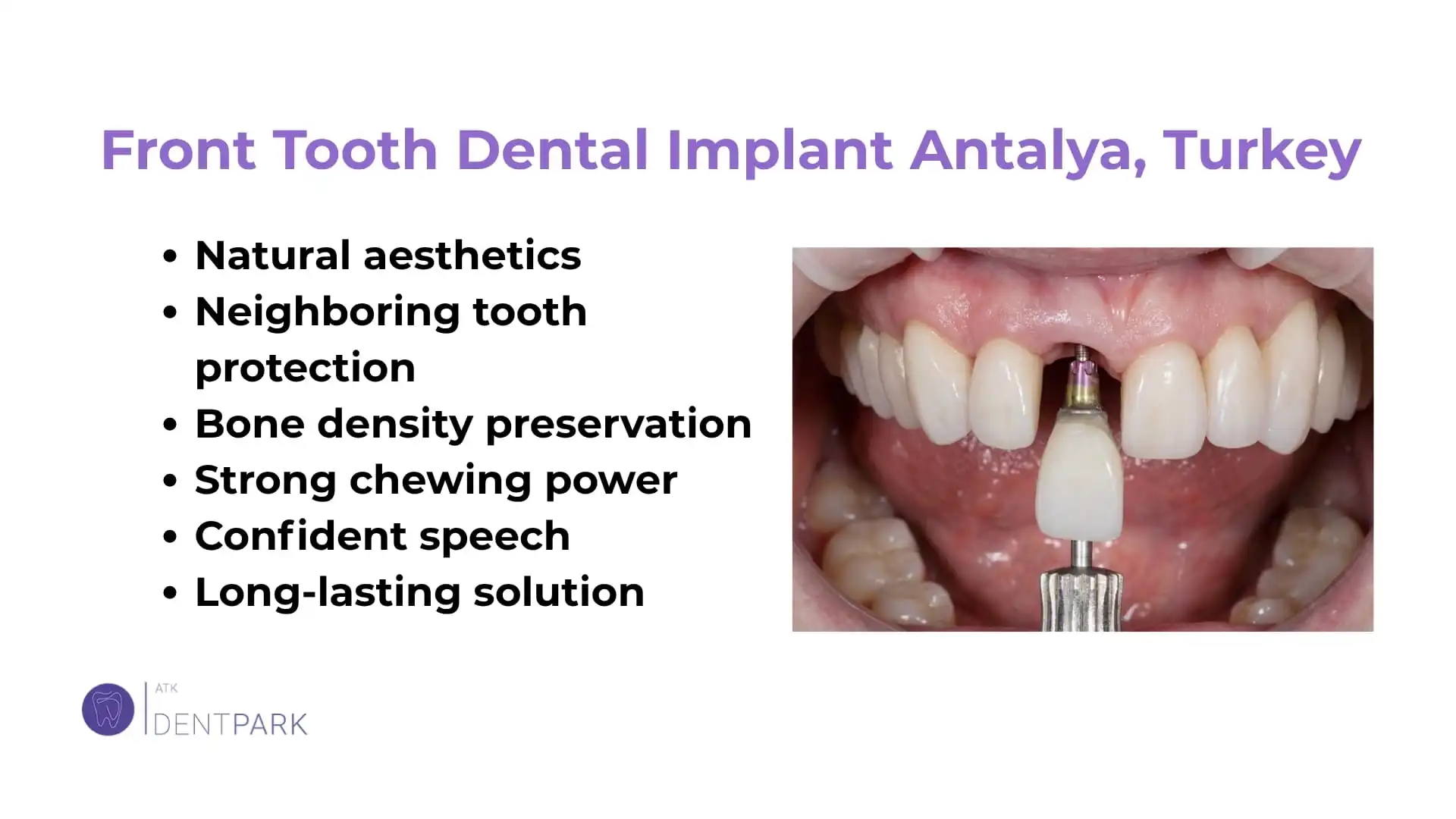
However, as the front region is the most noticeable area of the mouth, this treatment involves more than simply replacing a missing tooth. Gum compatibility, bone structure and aesthetic appearance are all assessed together. You could think of it as fitting the final piece of a jigsaw puzzle into place.
Transform your smile with dental implants in Antalya – contact ATK Dentpark today to find out more about the treatment process and costs.
Front teeth are the most visible teeth in the mouth. For this reason, they are more susceptible to impact, and any damage is immediately noticeable. The most common causes of front tooth loss are as follows:
Falls, road traffic accidents or blows sustained whilst playing sport can fracture front teeth or knock them out completely. Some injuries may appear minor at first. However, over time, the tooth may lose its vitality and extraction may be necessary.
As decay deepens, the tooth’s healthy structure is reduced. If the infection reaches the inner part of the tooth, a filling or crown may not be sufficient. In such cases, extracting the tooth and planning for a replacement may be the best option.
Gum disease does not only affect the gums. It also gradually weakens the bone that supports the teeth. Once a solid foundation is lost, even the strongest-looking tooth can become loose. Just as a building cannot stand if its foundations collapse.
Some people may be born without one or more front teeth due to genetic factors. This can affect both chewing function and the aesthetics of one’s smile. A dentist can prepare a treatment plan suited to the patient’s oral structure to fill this gap in a natural-looking way.
Old dental bridges or root-canal-treated teeth that have fractured may lose their function over time. In such cases, if it is not possible to save the tooth, a permanent solution is planned.
A front tooth implant does more than simply replace your missing tooth. It also restores your smile, your chewing ability and your confidence when speaking.
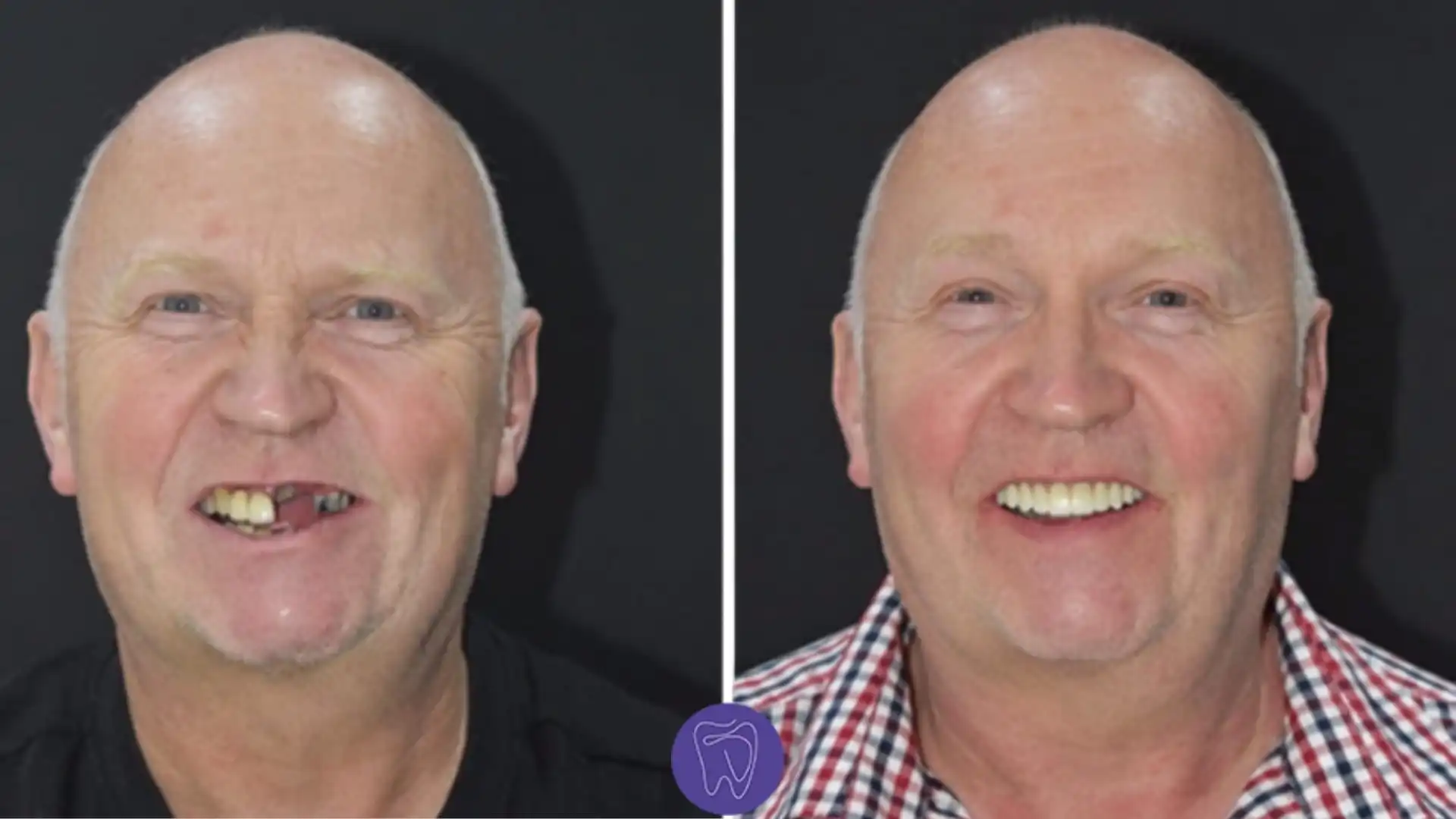
Dental implant treatment in Antalya is usually completed in 3 to 9 months for most people. If there is insufficient bone support, a bone graft may be necessary and can extend the treatment period for a few months. The procedure generally follows these steps, however:
Mild swelling and tenderness are considered normal in the first few days after implant surgery. Apply a cold compress to the swollen area if necessary. Medications prescribed by your doctor will help you get through this period more comfortably.
Choose soft foods in the first few days. Try not to chew on the side where the implant is located for about 2 weeks.
Avoid smoking and alcohol for the first month.
Brush your teeth regularly, use dental floss, and do not miss your check-up appointments. Proper oral care supports the successful integration of your dental implant with the bone.
The cost of a front tooth implant varies depending on the country where the treatment is carried out, the implant system and brand used, and any additional procedures such as bone grafting. For this reason, the cost is calculated differently for each patient.
With good oral hygiene and regular dental checkups, an implant can last for many years, even a lifetime. However, the porcelain crown on top may need to be replaced after about 10-15 years due to wear and tear.
When performed by an experienced dentist, the success rate is approximately 95-98%. Regular maintenance and good oral hygiene play a significant role in maintaining this success.
No, local anesthesia is used during dental implant treatment at our dental clinic in Antalya; most people only feel very mild discomfort. Mild pain and swelling that may occur after the procedure can usually be quickly controlled with medication and cold compresses.
As with any surgical procedure, implant treatment carries risks such as infection, implant failure, gum recession, or, rarely, nerve damage. Choosing an experienced dentist and following post-operative care recommendations significantly reduces these risks.
Yes. However, smoking reduces blood circulation and can make it difficult for the implant to fuse properly with the bone. Therefore, quitting smoking or at least taking a break during the healing period increases the chances of a successful treatment.
Brush your teeth regularly, floss, and don't miss your check-up appointments. You can think of it like regularly maintaining a valuable watch. A little care ensures many years of trouble-free use.