

Medically reviewed by Dt. Ela Yaşar, Dentist
Published on September 4, 2026
If you've noticed that your gums are receding, the question that immediately springs to mind might be: 'How much further do my gums need to recede before my tooth falls out? In most cases, as long as the bone supporting the tooth remains healthy, the tooth can remain firmly in place for many years, even if there is visible recession. What really determines whether a tooth will become loose or fall out is not the extent of the gum recession in millimetres, but the condition of the bone and tissue surrounding the root.
So, when does the risk increase? There is no single, definitive threshold applicable to everyone, such as 'a tooth will fall out at this many millimetres'. However, significant recession of 5 mm or more, particularly if accompanied by bone loss, presents a situation that warrants closer assessment. Here, what matters more than the number of millimetres is the extent to which the support around the tooth has been preserved.
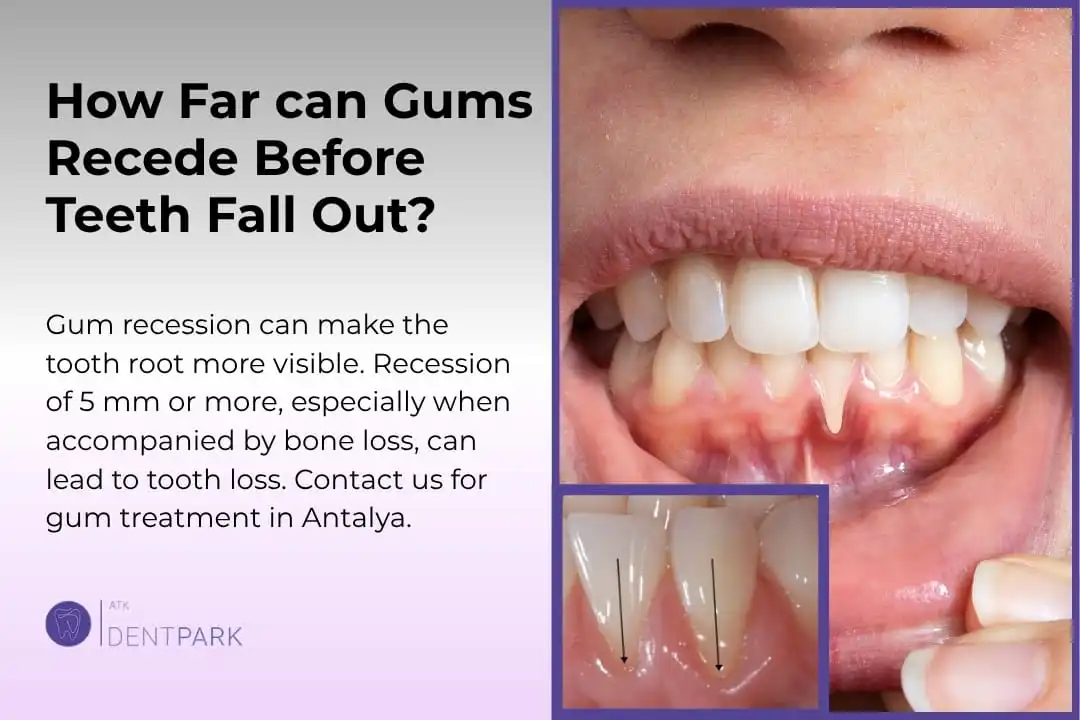
For this reason, it is incorrect to view gum recession solely as an aesthetic problem. Recession can expose the root surface. This can lead to sensitivity to hot, cold or sweet foods. In advanced cases, the supporting tissues around the tooth may also be damaged, and the tooth may begin to become loose.
If you wish to resolve your gum recession issue, you can always contact our ATK Dentpark clinic in Antalya to discuss the stage and progression of your condition.
Brushing too hard is one of the most common reasons. Especially if you use a hard toothbrush and scrub your teeth from side to side. Even if your teeth are clean, the gum can get damaged over time.
Gum disease is another important cause. Plaque and tartar irritate the gum. If this problem goes on, the gum and the bone supporting the tooth can slowly pull away.
Some patients have thin gums. In that case, the gum may recede more easily. Crooked teeth or teeth that sit too far forward make the gum thinner in certain areas.
Other factors are grinding the teeth, smoking, a strong bite, lip and tongue piercings, genetics, pregnancy, diabetes, medications, including steroids, some epilepsy medicines, cancer treatment drugs, certain calcium channel blockers and oral contraceptives.
Gums usually recede slowly, not fast! In many people, the change happens over years. So, it is difficult to notice it straight away.
The receding speed depends on what is causing problem. If you brush too hard every day, grind your teeth, smoke or have gum disease, the recession happens faster.
There is no fixed rate that applies to everyone. One study showed that existing recession increased by around 0.4 to 0.5 mm over four years on average. But this is only an average.
The first thing we often notice is that the gum line no longer looks even. Another important sign is that one tooth may start to look slightly longer than the others.
Other signs are:
As the recession moves further, the signs become easier to notice.
We see gum recession in patients from their 30s onwards. More commonly seen ages are in the 40s and 50s. However, it can begin much earlier if you have thin gums, crowded teeth or brush too aggressively.
Gum recession of 5 mm or more can increase the risk of a tooth becoming loose and being lost, particularly if there is also bone loss. However, it is not just the extent of gum recession that determines whether a tooth will fall out. How strong the bone supporting the tooth remains is more important. Measurements around healthy gums are generally between 1 and 3 mm. Deeper measurements, particularly those of 4 mm or more, require assessment for gum disease. Early treatment can help preserve the natural tooth by halting the progression of bone loss.
No, receding gums do not grow back on their own. Once the gum recession happens and your root is exposed, you cannot make it return with brushing, toothpaste or mouthwash.
At first, we try to stop negative effects of reasons on gum and give advice.
If the recession is more advanced, a gum graft may be needed to cover the root again.
We are here to evaluate your gum health and provide tailored, painless treatment options.
Book Your Consultation Now!If you're dealing with receding gums, the right treatment depends on what's causing it. At our dental clinic in Antalya, we start by identifying the cause before deciding what your gums actually need.
If you brush too hard, the first thing we change is your brushing technique. A soft toothbrush and light pressure are usually enough.
If the gum is inflamed, we need to clean the area properly. Sometimes a normal dental cleaning is enough. If the problem is deeper, we may need to clean below the gum line too.
When the root is exposed, cold water or hot drinks may hurt. A sensitive toothpaste can make the area feel more comfortable.
If you grind or clench your teeth, this pressure may make the problem worse. A night guard can help protect the teeth and gums while you sleep.
Sometimes one tooth receives too much pressure, or it sits too far forward. In that case, we may need to correct the bite or consider orthodontic treatment.
If the area is sensitive or does not look good, we can sometimes cover it with a tooth-coloured filling material.
If the recession is deeper, we may take a small piece of gum tissue and place it over the exposed root. This helps cover the area and makes the gum stronger.
These habits can help you avoid gum recession — but if you're already noticing symptoms, our team in Antalya can guide you through the right next steps.
Yes, severe gum recession can lead to tooth loss if it damages the bone and tissues supporting the tooth.
You are not only looking for dental treatment. You also want to feel comfortable, listened to, and in safe hands. This is what ATK Dentpark Clinic aims to give you.
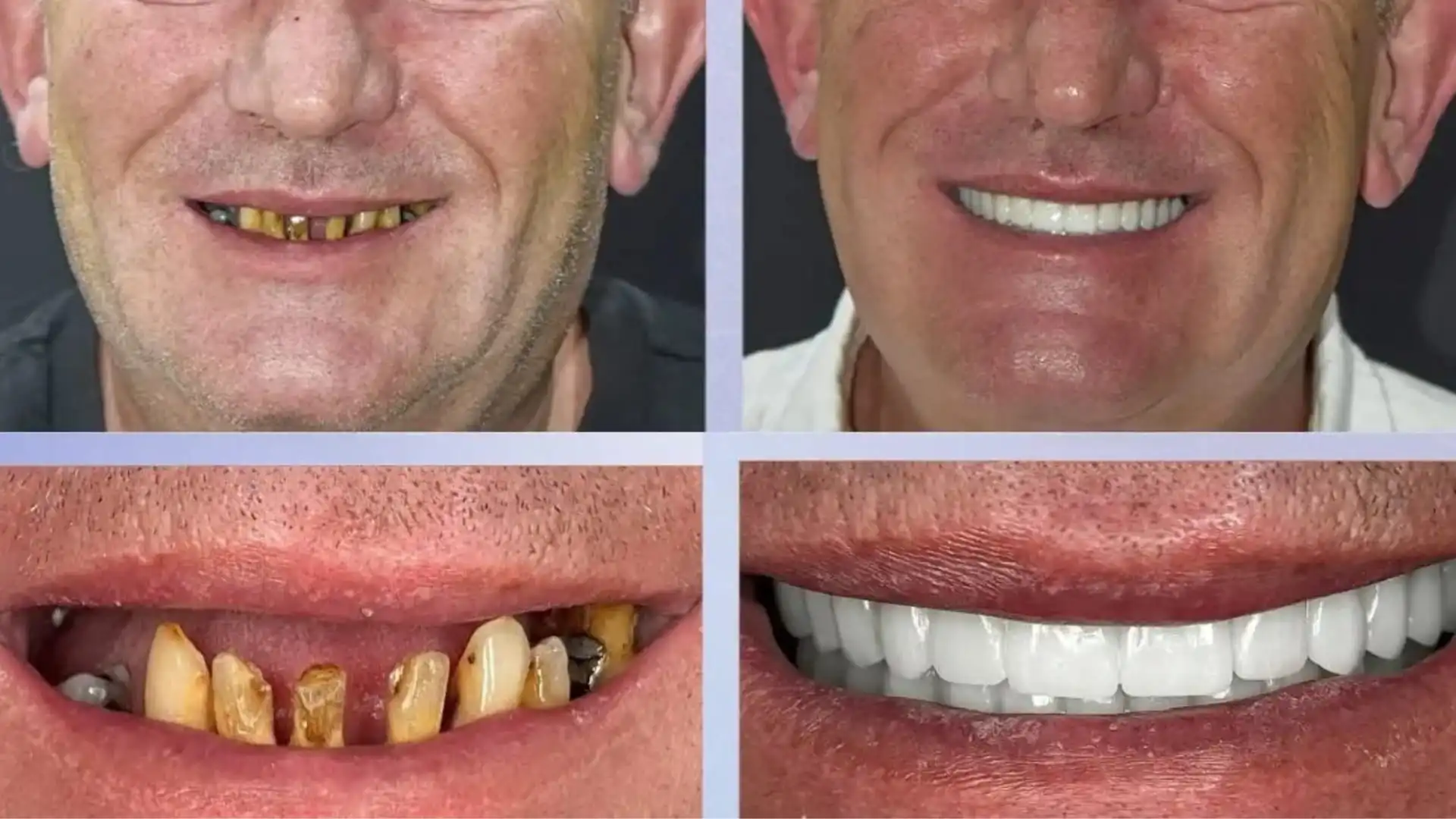
We take our time, listen carefully, and explain each step clearly. ATK Dentpark in Turkey also uses modern technology to make treatment easier, quicker, and more comfortable. From Hollywood smile to dental implants in Antalya , every part of your treatment is handled with care.
If you would like to speak with someone who understands the whole process, you can contact Dt. Ela Yaşar. She is friendly, patient, and highly experienced. She will answer your questions and guide you through each stage.