
Yes, getting dental implants in Turkey is very safe. Turkey has a good healthcare system and dental clinics – hospitals have to follow strict health rules. The government checks clinics, and those that don't follow the rules face fines or other penalties.
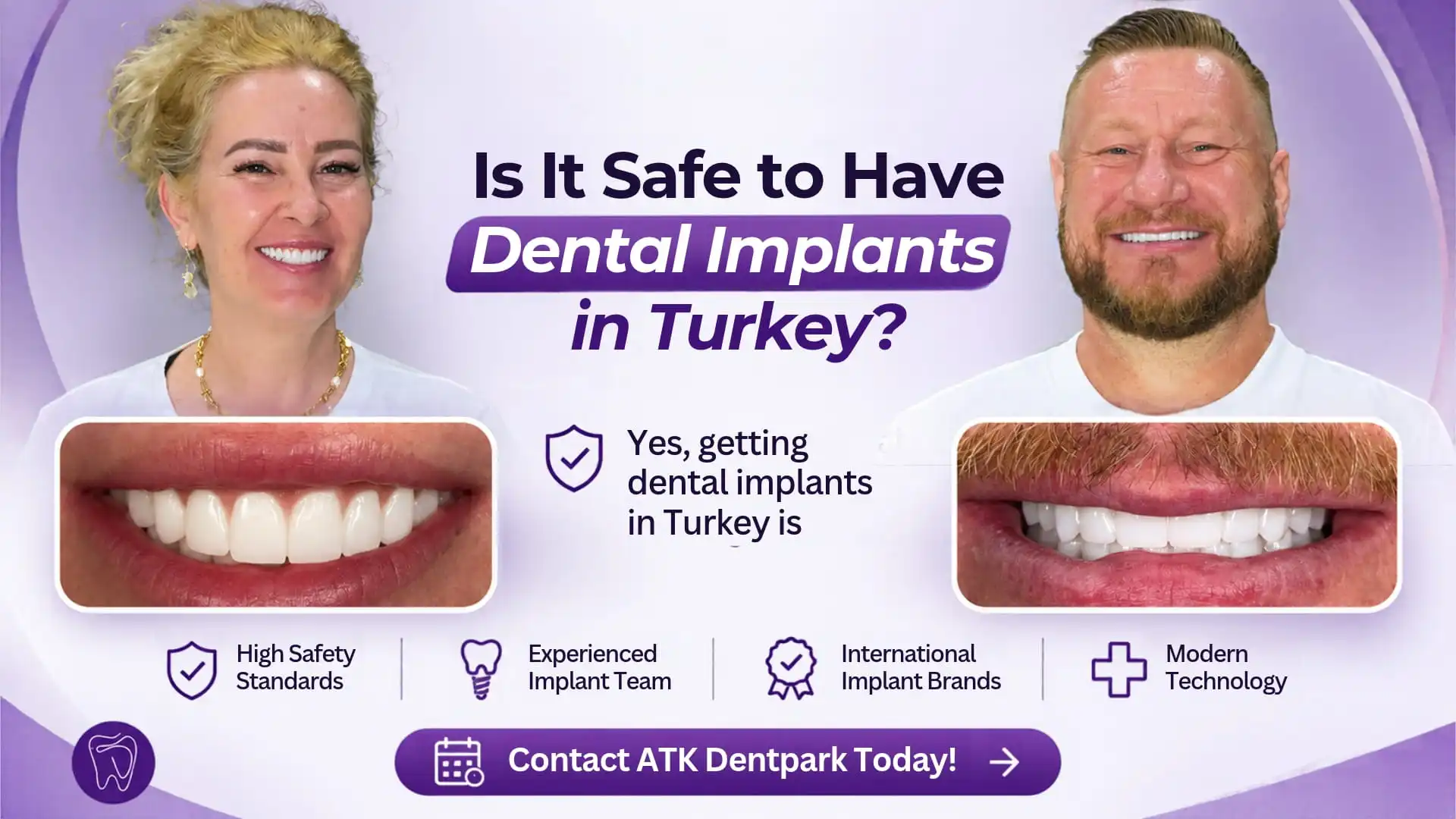
Dental training in Turkey is good too. Many dentists have years of experience and regularly treat patients coming from other countries. You'll have your treatment at modern clinics with up-to-date equipment. Many clinics use the same implant brands you'll find in the UK and Europe.
Still, choosing the right dentist matters. Before you book, check their experience, qualifications and patient reviews.
Several things affect how safe your dental implant treatment is. Your dentist needs to plan the surgery carefully, use good-quality implants and keep everything clean. What happens after surgery matters too.
Your dentist plays a big part in how safe your treatment will be. So, it's worth checking their experience before you book.
A good implant dentist knows how to deal with different types of patients. Some have weak jawbones. Others have gum disease or health problems that make healing harder. Your dentist needs to find these problems before surgery.
They also need to place the implant in the right spot. There are nerves and sinuses close to the jawbone. If an implant goes too close to a nerve, you could have numbness in your lip or chin. The wrong position may also cause pain or trouble when you bite.
This is why dentists use scans to plan the surgery. They can see where the implant should go and whether there's enough bone to hold it.
A good dentist won't suggest implants for everyone. Sometimes, treating your gums or adding bone first is the safer option.
An implant has to do quite a lot. It sits in your jawbone and supports your new tooth every time you eat.
Most implants are made from titanium. Dentists have used this metal for many years. Bone can grow onto its surface, helping the implant stay in place.
You may have heard of Straumann or Nobel Biocare. Implants like these brands have been around for years and they are durable implants.
With a poorly made implant, parts may not fit as they should. Screws can come loose. Some parts may even break. You might then need another visit or a new part.
The crown needs attention too. If it doesn't fit well, food may get stuck around it. You may also find it difficult to clean. Over time, this can cause gum problems.
When your dentist places an implant, they work through your gum and into the bone. So, keeping germs away from the area is very important.
An infection can cause pain, swelling and pus around the implant. If it reaches the surrounding bone, the implant may not heal well. Sometimes, it has to be removed.
Your dentist should use sterile instruments and surgical materials. The team needs to clean the treatment area properly and follow hygiene rules during surgery.
The tools used for surgery must go through proper sterilisation. Cleaning them with water or wiping them down isn't enough.
And a clinic doesn't have to look expensive to be clean. What matters is how the staff handle their equipment and how carefully they follow these rules.
Your implant won't be fully healed when you leave the clinic. The bone needs time to grow around it. This usually takes a few months.
You need to be careful during that time. Hard food can put pressure on a new implant. Smoking can slow healing too. Both may increase the chance of problems.
Keeping your mouth clean matters just as much. Bacteria can build up around implants. Your gums may start bleeding or become swollen. If you leave this untreated, you could lose bone around the implant. We call this peri-implantitis.
You may not notice bone loss yourself. That's why check-ups are important. Your dentist checks your gums, looks at the bone on an X-ray when needed and see whether the implant is doing well.
If you live in the UK, think about what happens after you leave Turkey. Will the clinic answer your questions? Who will check your implant at home? And where will you go if something feels wrong?
Your treatment starts with a check-up. The dentist looks at your teeth and gums. They'll also ask about your health and any medicines you take.
Your dentist may recommend a 3D scan when clinically indicated. This helps the dentist see how much bone you have and where the nerves and sinuses are. They need this information to find a good place for your implants.
After checking the scan, the dentist can tell you how many implants you need. You'll also find out if your jawbone is strong enough. If there isn't enough bone, you may need a bone graft before surgery.
First, the dentist numbs your mouth with a local anesthetic. You shouldn't feel pain during the surgery, but you may feel some pressure.
The dentist makes a small cut in your gum to reach the jawbone. They then prepare a hole in the bone and place the implant inside. It looks like a small screw and takes the place of your missing tooth root.
Once the implant is in, the dentist may cover it with your gum or put a healing cap on top.
After surgery, your implant needs time to settle into your jawbone. The bone slowly grows onto the implant and holds it in place.
We call this osseointegration. In simple words, it means your bone is joining with the implant. This period often takes around 3 to 6 months, but may take longer depending on your health and whether bone grafting is needed.
You may have a temporary tooth during this period. You'll also need to avoid putting too much pressure on the new implant. Hard or chewy foods can cause problems while it's healing.
Once the implant has healed, it's time for your new tooth.
The dentist takes a scan or mould of your mouth. A dental lab then makes a crown to match the shape, size and color of your other teeth.
A small part called an abutment connects the crown to the implant. The dentist fits the crown and checks your bite.
Now, you can start using your new tooth as your dentist advises. You'll still need to brush it, clean around the implant and have regular dental visits.
Not every dental clinic in Turkey is the same. Some have dentists with years of implant experience. Others may have only recently started offering the treatment. So, before you choose a clinic, check a few things.
Treatment may involve two visits several months apart. A stay of around 5 to 7 days per visit may be suggested for some treatment plans, but surgery, bone grafting and laboratory work can change the schedule. Confirm your individual timetable with your dentist before booking travel.
The total cost depends on the implant system, abutment, crown material and any preparatory treatment. Ask for a personalised written quotation that lists scans, temporary teeth, medicines, bone grafting and follow-up separately. Confirm travel and accommodation costs before booking.
Contact ATK Dentpark to learn more about dental implant prices in Antalya and to have a personalized treatment plan and price quote prepared for you.
Getting dental implants in Turkey is very safe, but problems can still happen, just like in any other country.
You could get an infection after surgery. Sometimes, the bone doesn't heal well around the implant. If this happens, the implant may become loose or need to be removed.
There is also a small risk of nerve damage. This can leave your lip or chin feeling numb. Implants in the upper jaw can sometimes cause sinus problems too.
A lower price does not automatically mean lower quality. Operating costs and treatment packages can differ, and some Turkish clinics use internationally available implant systems. Check the actual implant brand, dentist qualifications and aftercare arrangements rather than judging quality by price alone.
If your implant treatment fails, contact your clinic in Turkey, then see your local dentist as soon as possible. You may need treatment. Check your clinic's guarantee too. Some clinics offer free replacement, but you may have to pay for flights and accommodation.
Your treating dentist should confirm when you are fit to fly after reviewing your recovery. The timing depends on the surgery, any sinus treatment or bone grafting, and whether you have bleeding, swelling or other complications. Arrange a postoperative review before departure.
Deciding to seek dental treatment abroad is a significant step. Finding a clinic you can trust makes the process much easier. At ATK Dentpark, we listen to your goals, clearly explain your treatment options, and give you the time you need to make your decision.
Whether you are considering dental implants, veneers, or zirconium crowns, our team will dedicate the necessary time to understand your objectives, outline your treatment choices, and help you make an informed decision.
Contact ATK Dentpark today to discuss your options.